





Climate Week with Leah Stokes and Elizabeth Cabral
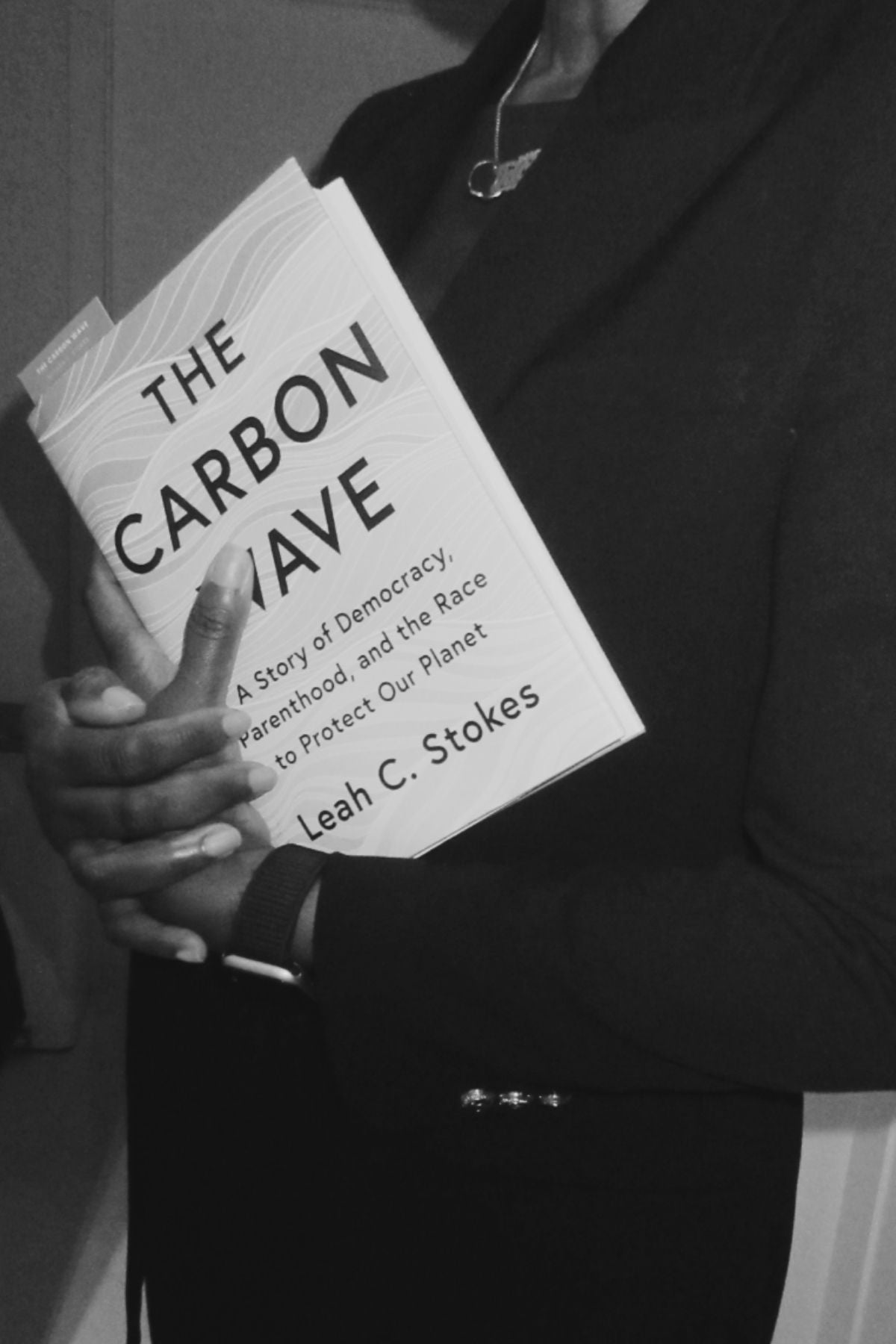
On Tuesday evening, Merlette hosted its first Climate Week event at the Tribeca flagship, celebrating the launch of Dr. Leah Stokes’ new book, The Carbon Wave. As a brand that values thoughtful design, intentional production, and pieces made to last, the conversation felt especially relevant to Merlette and its belief in a more sustainable future.
Leah, the Anton Vonk Associate Professor of Environmental Politics at UC Santa Barbara, co-host of A Matter of Degrees, and a TIME100 Next climate leader, joined Elizabeth Cabral, founder of Purpose Collective, for a conversation on climate, motherhood, and the power of collective action. At the heart of the evening was a question that feels increasingly urgent: What does it mean to raise the next generation while also working to protect the world they will inherit?

EC: What do friendships and spaces outside of the usual policy and academic circles bring to conversations like this?
LS: When you ground the work in real, deep friendships and relationships, there's just a level of trust there. If we want to grow the movement, we really have to keep it open, as a place where people can feel curious and want to learn.
EC: Why did you decide that this story needed to begin personally rather than politically or professionally?
LS: I think when you start with human, personal stories, it brings people in. It's coming in with the heart first rather than the head first.
EC: There's this early idea in the book that we need to stop thinking so much about minimizing our individual impact and start thinking about how we can maximize our impact. Can you unpack that distinction?
LS: The goal isn’t simply to shrink our individual impact, but to think about how we can maximize our collective impact. Individual actions matter, but when we join together, we have the power to change the systems that shape our lives. We’re each a drop, but together, we become a wave.

EC: What did following the stories of staffers and other behind-the-scenes people, rather than politicians themselves, teach you about where power actually lies?
LS: Everyday people, flawed, busy, juggling kids and health problems, are far easier to imagine yourself as than a historic figure. Telling their stories is what makes the work feel accessible rather than reserved for insiders.
EC: What separates persistence from blind optimism, and how do you know when something's still worth fighting for?
LS: Activism is like jazz. It's improvisational. It's not a straight line, and you're always looking for glimmers and bright spots and new ways in. I think I'm pragmatic. I just think the alternative is bleak, so why don't we work every day for a better future?
EC: Did becoming a mother change how you understood climate change, or its urgency?
LS: In some ways, motherhood deepened my connection to the work. You have this moment where you see other life force in your children's faces, like you see birds or fish or frogs. We are all connected to other life. It made me feel more deeply connected to all life, and it almost broke me open in an expansive, compassionate, loving way.

EC: If you could leave this room with one shift in how people think about their own role, what would it be?
LS: I would say the number one thing people can do is join an organization, find another person who's excited about what you're excited about. That's how we meet others and we connect and we can change the world. We are way more powerful than we realize. I just hope that people will believe that their actions can have consequences and ripples throughout the world, because they really can.
Order Leah’s book, The Carbon Wave, HERE.
Download Leah’s Carbon Calculator HERE.
Download the Purpose Collective IOS App HERE.